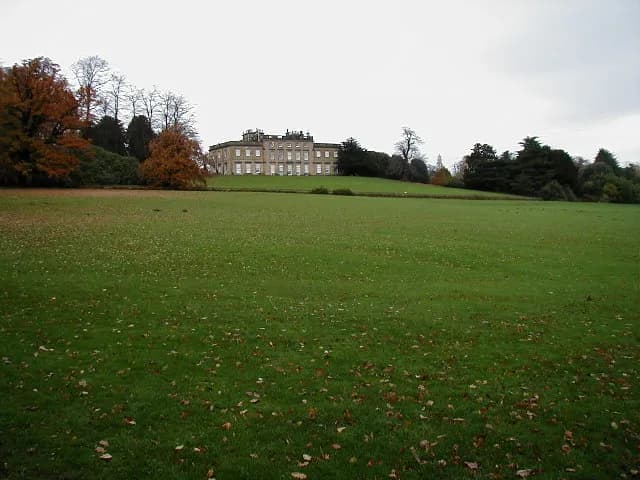
A Georgian country house with three centuries of history sits five miles west of Barnsley town centre, surrounded by 70 acres of landscaped parkland. Cannon Hall has served as a family residence, a centre for Pre-Raphaelite art, and since 1957, a museum that welcomes visitors without charge.
From Iron Fortune to Architectural Legacy
The Spencer family arrived at Cannon Hall in 1660, when John Spencer, a hay-rake maker from Montgomeryshire in Wales, purchased the estate. The name itself stretches further back: "Cannon" derives from Gilbert Canun, a 13th-century inhabitant, and a house stood on this site as early as the Domesday Survey of 1086.
The hall that visitors see today took shape during the 18th century. John Carr, the premier mid-Georgian architect in Yorkshire, added the east and west wings between 1764 and 1767. Carr, who also designed Harewood House and Buxton Crescent, employed Palladian principles: the central block rises three storeys with five bays, flanked by set-back two-storey wings of three bays each, all constructed from coursed sandstone with ashlar dressings. The building holds a Grade II* listing.
The Spencer family's wealth originated in industry. Walter Spencer-Stanhope (1749–1822) built the family fortune through iron and coal, investments that funded both the hall's expansion and its cultural life.
A Dynasty of Artists
The Spencer-Stanhope family produced more than industrialists. John Roddam Spencer-Stanhope (1829–1908) became a noted second-generation Pre-Raphaelite painter. His sister Gertrude painted and sculpted in the same tradition. Their niece Evelyn Pickering, who married ceramicist William De Morgan, achieved recognition as a Pre-Raphaelite artist under the name Evelyn De Morgan.
These artistic connections shape the museum today. In March 2016, the De Morgan Foundation established galleries in the hall's east wing, displaying works by Evelyn and William De Morgan alongside Spencer-Stanhope family pieces. The long-term exhibition "Family of Artists" presents ceramics, paintings, and decorative arts that trace this creative lineage.
Museum Collections and Current Exhibitions
Cannon Hall Museum offers free admission and opens Thursday to Sunday from 11am to 4pm. The collections span four centuries: Georgian furniture, 17th-century Dutch masterpieces, modern art glass, and contemporary British studio ceramics.
A special exhibition, "Cannon Hall: The Story of a House and Its Family," runs until 20 September 2026. It explores 300 years of the estate's history, from the Spencer family's arrival through its transformation into a public museum.
The hall previously housed the Regimental Museum of the 13th/18th Royal Hussars and Light Dragoons, though this collection has since closed.
Park, Gardens, and the Muscat Grapevine
The parkland surrounding Cannon Hall was landscaped in the 18th century by Richard Woods of Chertsey. Lakes, waterfalls, follies, and carefully planned vistas extend across the grounds. The Victorian pleasure grounds sit near a Georgian walled garden containing more than 40 varieties of pear trees.
Within the glasshouses, rebuilt in the Victorian era, grows the Cannon Hall Muscat grapevine. John Spencer Stanhoe reputedly brought the seed from Greece; the cultivar later spread to California and Western Australia, making this plant historically significant well beyond Barnsley's borders.
Cecily Spencer-Stanhope created "Fairylands," a decorative garden area that remains part of the pleasure grounds. The park retained its Green Flag Award for 2024, recognition of its quality and management. A £3 million restoration project, funded by the National Heritage Lottery Fund, continues to return the parklands to their Georgian splendour.
Food and Drink: The Pear Tree Pantry and Pavilion Café
The Pear Tree Pantry operates within the walled gardens, serving hot and cold sandwiches, sausage rolls, pork pies, and fresh cakes. Vegan and gluten-free options are available, alongside locally roasted coffee and a wide selection of teas. The Pantry uses alternative milks at no extra charge and welcomes dogs and children. Outdoor seating overlooks the gardens.
The Pavilion Café, located elsewhere in the park, offers sandwiches, soups, cakes, pastries, and hot and cold drinks. Indoor seating and a terrace overlook the park, and a children's menu is available. Takeaway service operates year-round, though the café closes on Christmas Day.
A Space for the Community
Barnsley Metropolitan Borough Council purchased Cannon Hall in 1951 after Elizabeth Spencer Stanhope, the last family member, sold the estate. The museum opened to the public in 1957. It now forms part of Barnsley Museums, which recorded two million visitors across its five venues during 2024–25.
The park and gardens serve as a major recreational space for Barnsley residents. A children's play area includes slides, swings, a roundabout, climbing frames, interactive equipment, accessible play features, wooden tepees, balance beams, and assault courses.
Annual events include a Regency Ball and a Christmas Fair each December. Guided tours, workshops, and children's activities run throughout the year. The museum offers virtual tours and online events for those who cannot visit in person.
Practical Information
Cannon Hall stands at Bark House Lane, Cawthorne, Barnsley S75 4AT. The museum opens Thursday to Sunday, 11am to 4pm, with free entry. The park, gardens, Pear Tree Pantry, and car park operate seven days a week.
Parking charges apply: £1 for two hours, £5 for all day, and £5 for coaches. A season ticket costing £125 also covers parking at Worsbrough Mill.
Contact: 01226 772 002 or cannonhall@barnsley.gov.uk.
Volunteer opportunities are available through museumvolunteering@barnsley.gov.uk.
Nearby: Cannon Hall Farm
Adjacent to the museum, Cannon Hall Farm represents a separate but related attraction. The former home farm to the estate, it has opened to visitors since 1989 under the Nicholson family. The farm includes a farm shop, delicatessen, and restaurants. It won Best Tourist Experience at the Welcome to Yorkshire White Rose Awards in 2011.
Together, the museum and farm create a destination that combines heritage, horticulture, recreation, and local food; a reflection of how Cannon Hall continues to serve the Barnsley community nearly 370 years after the Spencer family first arrived.